Airlines change ticket prices all the time. Hotels can do the same. Yet many independent hotels still sell the same room at the same rate for months. Dynamic pricing for hotels changes that. It lets your rates move with demand, so you earn more when guests want to stay and still win bookings when they don't.
This guide shows you how dynamic pricing works, what drives it and how to build a simple, practical hotel pricing strategy.
What Is Dynamic Pricing for Hotels?
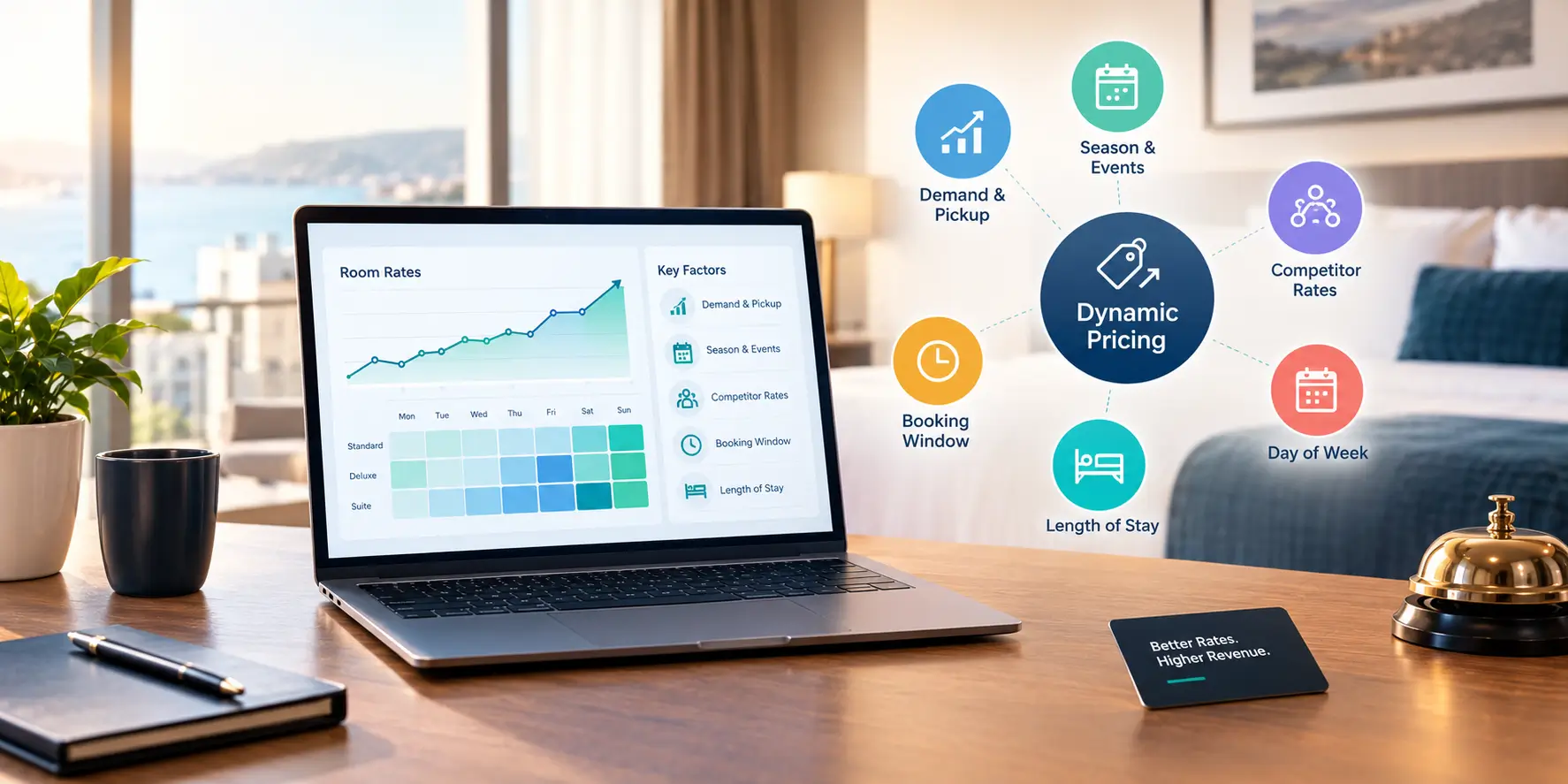
Dynamic pricing means changing your room rates based on real demand instead of keeping one fixed price. When demand is high, rates go up. When demand is low, rates come down or smart offers open. The aim is the best total revenue across the year, not the highest rate on one night.
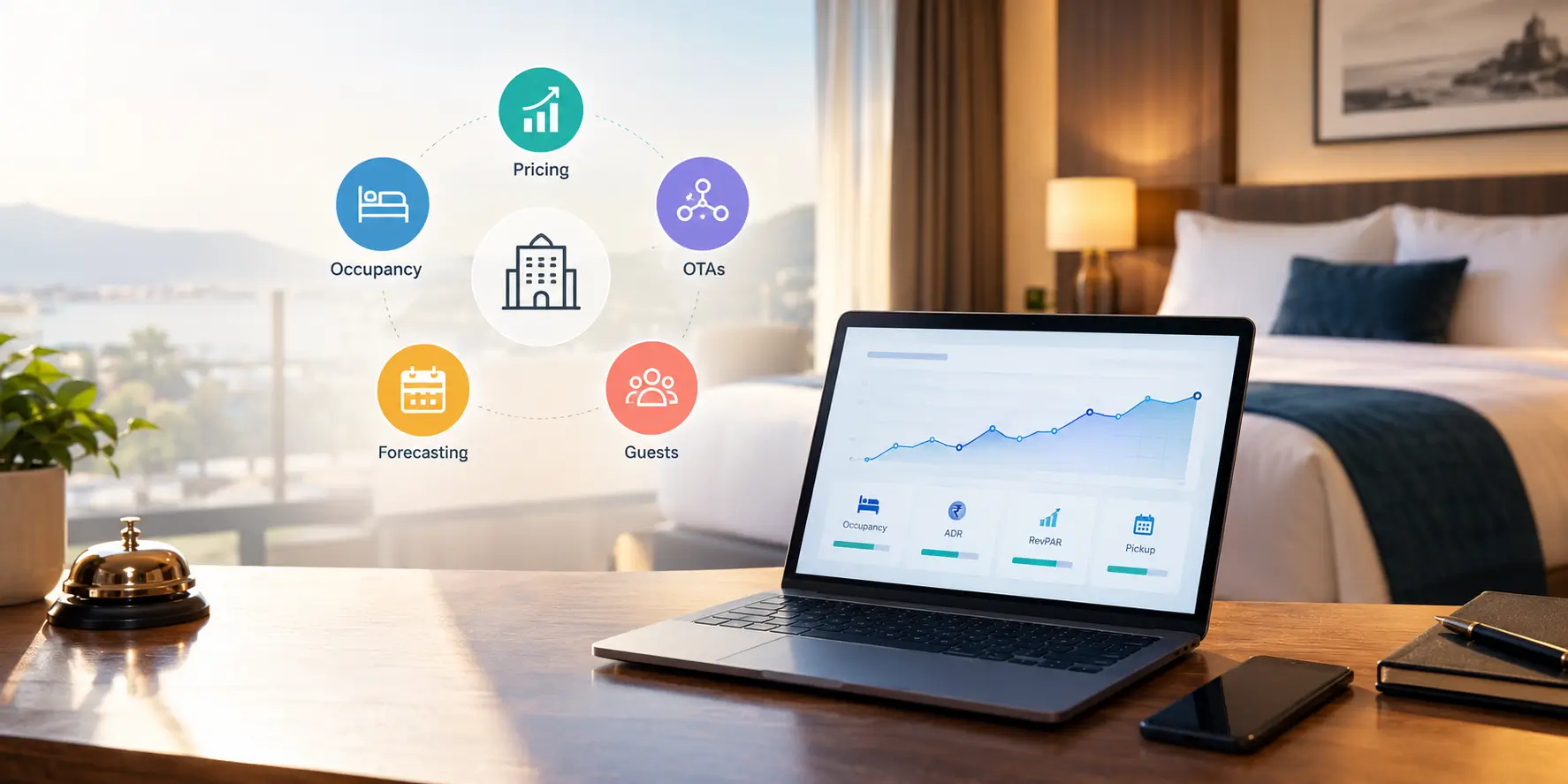
It is one of the core parts of revenue management for hotels, alongside forecasting, OTA management and reporting.
Why Fixed Rates Cost You Money
A fixed rate is almost always wrong. On a busy festival weekend it's too low, and you sell out early to guests who would have paid more. On a quiet Monday it's too high, and rooms stay empty. Either way you lose revenue you can never get back, because tonight's empty room can't be sold tomorrow.
What Drives Dynamic Hotel Room Pricing?
Demand and Pickup
Pickup is the number of new bookings for a future date since you last checked. Fast pickup means demand is strong and you can raise rates. Slow pickup is an early warning to act before it's too late.
Seasons, Holidays and Events
School holidays, festivals, conferences, concerts and sports events all change demand. A good pricing calendar marks these dates months in advance. This matters most for resorts and leisure hotels, where seasons can make or break the year.
Day of the Week
City and business hotels are often busy Monday to Thursday and quiet at weekends. Leisure hotels are usually the opposite. Your rates should follow your own weekly pattern.
Competitor Rates
Guests compare. Tracking similar hotels nearby shows where you sit in the market. You don't need to be the cheapest. You need to offer clear value at your price.
Booking Window
How far ahead guests book changes what they will pay. Early bookers may need a reason to commit. Last-minute guests often pay more if few rooms are left.
Length of Stay
Longer stays fill gaps and lower costs. Length-of-stay pricing rewards guests who stay three nights, a week or a month, which is key for serviced apartments.
How to Build a Simple Hotel Pricing Strategy
4. Set a base rate for each room type. This is your normal price on an average night.
5. Set a floor and a ceiling. The floor protects your brand and costs. The ceiling keeps you realistic.
6. Create demand levels. For example: low, medium, high and peak. Give each level a price range.
7. Mark your calendar. Tag every future date with a demand level using last year's data, events and holidays.
8. Review pickup daily. Move dates up or down a level when bookings are faster or slower than expected.
9. Check competitors on key dates. Focus on weekends, events and peak periods.
10. Keep rates in sync on every channel. Use your channel manager so OTAs and your website always show the right price. Not sure yours is up to the job? See how to choose the best channel manager for hotels.
11. Review results monthly. Compare ADR, occupancy and RevPAR with your forecast, then adjust.
Dynamic Pricing Mistakes to Avoid
· Changing rates with no reason. Every change should come from demand, pickup or the market.
· Discounting too early. Panic discounts train guests to wait for deals.
· Copying the cheapest competitor. Price on value, not fear.
· Forgetting rate parity. Different prices on different OTAs can hurt your ranking and guest trust, which is a key concern for luxury hotels.
· Setting and forgetting. Dynamic pricing only works if someone reviews it every day.
Dynamic Pricing and OTAs
Your rates appear on Booking.com, Expedia, Agoda and Airbnb as well as your own website. Dynamic pricing works best when every channel updates together and your listings are fully optimised. If your hotel isn't live on all the right OTAs yet, start with our OTA listing services for hotels.
Do You Need Software or a Team?
Pricing software can suggest rates, but someone still has to check the logic, set the rules and act on the data every day. That's why many independent hotels choose hotel revenue management services: an expert team that runs dynamic pricing for you and explains every change.
How RevAlpha Runs Dynamic Pricing for Your Hotel
At RevAlpha, by Hospitality Minds, dynamic pricing is part of a fixed daily rhythm: rate reviews on working days, daily pickup checks, competitor tracking on priority dates and proactive alerts before important revenue dates. Every month, we review results with you and plan the next steps. Explore our full hotel revenue management solutions.
Start Pricing With Confidence
Dynamic pricing is one of the fastest ways to grow hotel revenue without adding rooms. If you'd like experts to run it for you, request a call with RevAlpha and we'll show you where your rates can work harder.
Frequently asked questions
Review rates daily and change them whenever demand, pickup or competitor prices move. Busy periods may need several changes a week.
Yes. Even a 10-room hotel earns more when rates follow demand. See our budget hotel revenue management plan.
Guests are used to changing prices from airlines and travel sites. What matters is clear value and consistent rates across channels.