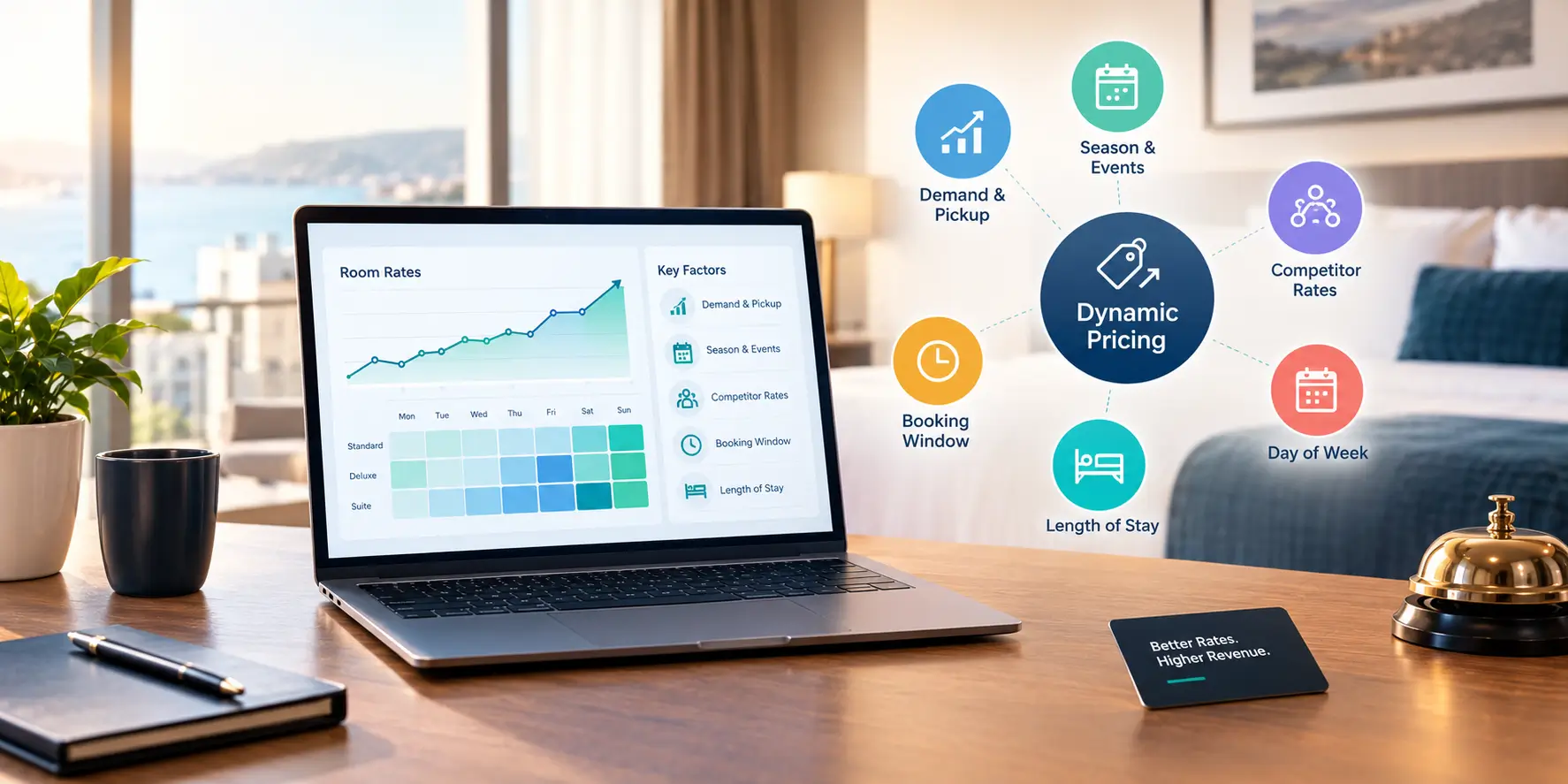

Every hotel has a fixed number of rooms. Every night you don't sell a room, that revenue is gone for good. And every room you sell too cheaply is money left on the table. That is why so many owners ask the same question: what is hotel revenue management, and how do I make it work for my property?
This guide explains it in plain words. You will learn what it means, how it works day to day, which numbers matter, and when it makes sense to bring in a hotel revenue management company to run it for you.
What Is Hotel Revenue Management?
Hotel revenue management means selling the right room to the right guest, at the right price, through the right channel, at the right time. In short, it is the daily work of deciding how much each room is worth tonight, next week and next season, and then making sure those rates are live everywhere guests book.
Good revenue management for hotels is not about always charging more. Sometimes it means raising rates on a busy weekend. Sometimes it means opening a smart offer on a quiet Tuesday so the room earns something instead of nothing. The goal is the best total revenue across the whole year, not the highest price on any single night.
Why Revenue Management Matters for Independent Hotels
Big hotel chains have full revenue teams. Most independent hotels don't. Rates are often set once and forgotten, or changed in a rush when occupancy looks low. That leads to three common problems:
· Strong nights get sold out early at a low rate.
· Slow nights get heavy discounts that train guests to wait for deals.
· OTA listings run without a plan, so commissions rise while direct bookings fall.
A clear revenue process fixes this. It gives every rate decision a reason, so your hotel earns more from the same rooms. That is the idea behind RevAlpha: your rooms are fixed, your revenue shouldn't be.
How Hotel Revenue Management Works: The Core Steps
1. Forecasting Demand
Revenue management starts with a view of the future. Your revenue manager looks at past bookings, pickup (how fast rooms are being booked), local events, holidays and seasons to forecast how busy each date will be.
2. Setting a Hotel Pricing Strategy
With a forecast in hand, you can build a hotel pricing strategy. High-demand dates get higher rates and fewer discounts. Low-demand dates get targeted offers, packages or length-of-stay deals. This is where dynamic pricing for hotels comes in: rates move with demand instead of staying flat all year.
3. Watching Competitors
Guests compare prices before they book. Tracking the rates of similar hotels nearby helps you stay competitive without starting a price war.
4. Managing OTAs and Distribution
Booking.com, Expedia, Agoda and Airbnb bring guests from all over the world. But each channel has its own commission and rules. Strong OTA management for hotels keeps rates and availability correct on every channel, improves your ranking, and balances OTA bookings with direct ones. If you are not live on the major OTAs yet, start with OTA listing services for hotels.
5. Reviewing Performance
Every week and month, results are checked against the forecast. What worked is repeated. What didn't is fixed. This rhythm is what turns revenue management from a one-off project into steady growth.
The Key Hotel Revenue Management Numbers
You don't need to be an analyst, but these four numbers tell you how your hotel is doing:
· Occupancy: the share of available rooms you sold.
· ADR (Average Daily Rate): the average price paid per sold room.
· RevPAR (Revenue per Available Room): total room revenue divided by all available rooms. It combines occupancy and rate, so it is the best single health check.
· Pickup: how many new bookings came in for a future date since you last checked.
A hotel can have high occupancy and still earn less than it should if ADR is too low. Revenue management looks at all of these together.
Revenue Management Is Different for Every Hotel Type
A beach resort, a city business hotel and a 15-room guest house earn money in very different ways. That's why RevAlpha builds plans by hotel type:
· Resorts and leisure hotels plan around seasons, holidays and weekends.
· Business hotels focus on weekday corporate demand and filling weekends.
· Boutique hotels protect premium rates without leaving rooms empty.
· Budget hotels need simple, steady pricing and strong OTA visibility.
Software, In-House Team or Outsourced Service?
There are three ways to run revenue management:
1. Software only: a revenue management system suggests rates, but someone still has to read it, decide and act every day.
2. An in-house revenue manager: great control, but a full-time salary that many independent hotels can't justify.
3. Outsourced hotel revenue management services: an expert team runs pricing, OTAs, forecasting and reporting for you, for a monthly fee.
For most independent hotels, the third option gives the best mix of skill and cost. You can compare what each level includes on our hotel revenue management plans page.
How RevAlpha Helps
RevAlpha is the revenue management arm of Hospitality Minds. We work as your outsourced revenue team, with daily rate and pickup reviews, competitor tracking, OTA management, monthly strategy reviews and proactive alerts before important dates. You always know what we changed and why.
Want to see what this looks like for a real hotel? Read our hotel revenue management case studies.
Start Earning More From the Same Rooms
Hotel revenue management is not a luxury for big brands. It is the simplest way for any hotel to earn more without adding a single room. If you'd like an expert team to handle it, request a call with RevAlpha and tell us about your property.
Frequently asked questions
It is the daily practice of pricing your rooms and managing your sales channels so your hotel earns the most total revenue from the rooms it has.
No. Small and independent hotels often gain the most, because they usually start without any structured pricing.
Marketing brings guests to your hotel. Revenue management decides what each booking is worth and where it should come from. The two work best together.