By Pawan Sahani, Director of Revenue Management | RevAlpha, powered by Hospitality Minds
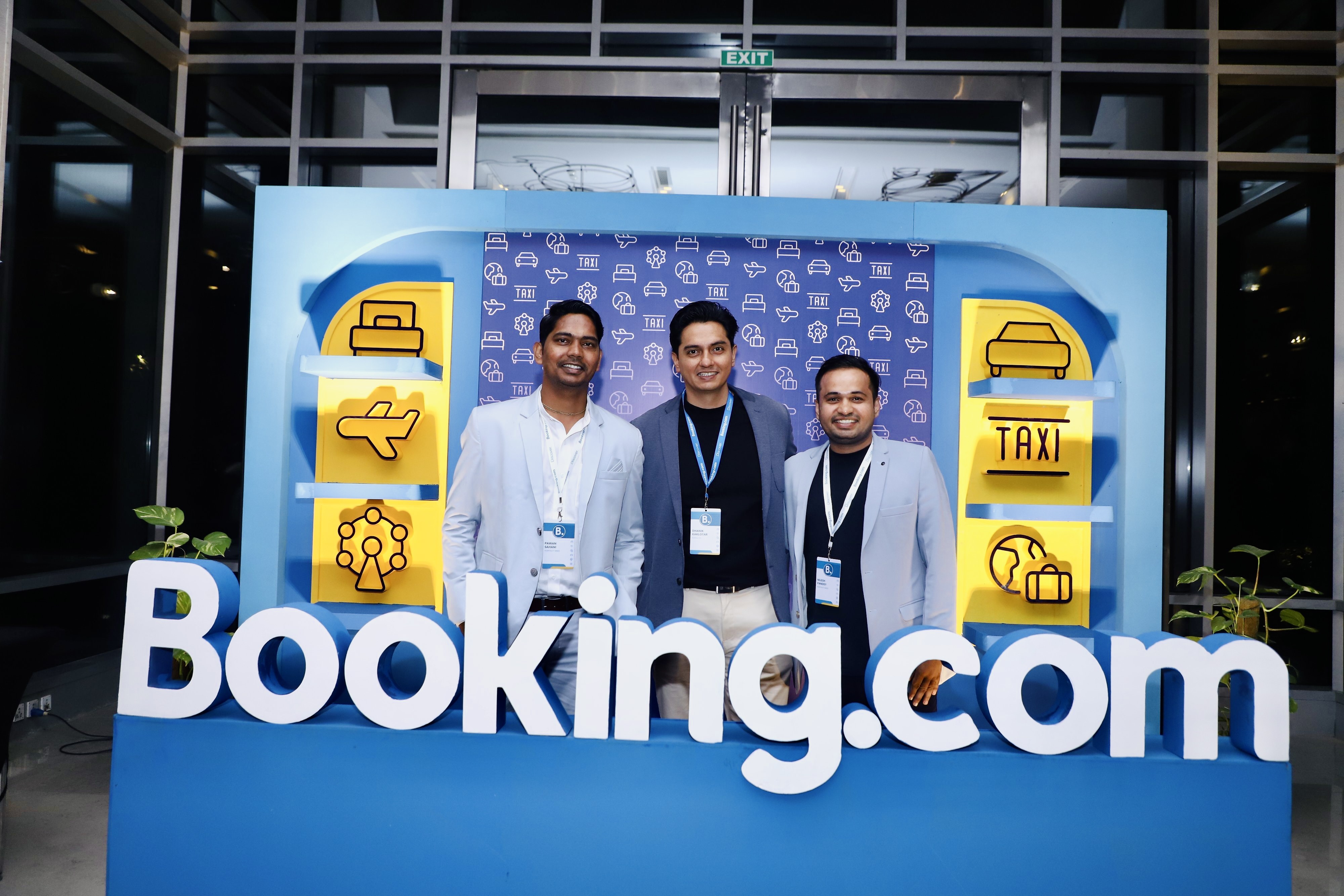
A rate calendar tells you what happened. It rarely tells you why. Some of the biggest forces behind your occupancy, ADR and channel mix are being shaped far from your front desk, on the platforms and in the tools guests now use to plan a trip. That is why our revenue team was at the Booking.com Discovery Event on 15 October 2026 at Andaz by Hyatt.
Three themes ran through the day: the growth of alternative accommodation, the push toward frictionless payments, and AI changing how travellers discover and choose a stay. Read alongside the research Booking.com published the same week, they add up to a clear set of hotel revenue management trends for India in 2026. Here is what each one means for pricing, distribution and forecasting, and what we would do about it.
Lesson 1: Your Compset Is Bigger Than the Hotels on Your Street
Alternative accommodation is no longer a niche. It now makes up 37% of Booking.com's bookings globally. In India, listings on the platform have grown from just over one lakh three years ago to 2.15 lakh, the category is about 13% of lodging gross booking value, and searches for it grew 6% between FY24 and FY25, compared with 2% for hotels. The market is projected to cross ₹41,000 crore within three years.
The figure that matters most for revenue managers comes from Booking.com's How India Travels 2026: The Homes Edit: 62% of consumers compared alternative stays against hotels on their most recent leisure trip. This is not only a leisure story either. Property owners listed business travellers among their three most frequent guest types, and half of the business travellers surveyed said they would consider an alternative stay even for a one- or two-night solo trip.
What this means for your rates
If a family of four can book a three-bedroom villa with a kitchen for less than your two connecting rooms, they will, and your rate shop will never show you why. A compset made only of nearby hotels can make a rate look competitive when it is not.
-
Add the villas, serviced apartments and premium homestays in your catchment to your rate shopping for key dates.
-
Compare on total trip cost for groups and families, not just on the price of one room per night.
-
Use length-of-stay rates and restrictions to compete for longer trips without giving away peak nights.
Lesson 2: Compete Where Hotels Win, Not Only on Price
This trend also brings opportunities. Supply is a real limit on Indian tourism. International arrivals have grown from 10 million in 2014 to 21 million, domestic trips from 1.32 billion to over four billion, and the Ministry of Tourism's view is that India needs roughly double its current room supply. Alternative stays are opening up destinations that had no rooms to sell before, not only taking guests from hotels.
Hotels can't beat a villa on floor space. They can win on location, consistent service, safety and a team at the desk at 2 a.m. Package and price those strengths openly: connecting-room and family rates, longer-stay offers and local design touches. RevAlpha builds this kind of strategy for boutique hotels, and we also help villas and homestays and serviced apartments price like professional operators.
Lesson 3: Payment Settings Are a Revenue Lever
Most hotels treat payments as an accounting issue. In reality, the payment step is the last screen between a guest who wants your room and a confirmed booking. Booking.com's own developer documentation lists what poor payment handling causes: checkout drop-off, inconsistent experience, post-booking disputes and loss of trust at the moment of booking. We see three revenue effects:
Revenue effect | Why it matters | What to check |
Conversion | If a competing listing offers one-tap prepayment and you only offer pay-at-property, you lose bookings on friction, not on rate. Lost bookings don't show up in any report. | Which payment models are switched on in your extranet, and whether each one is there by choice or by default. |
Forecast quality | Prepaid bookings bring cash in before arrival and cut no-show risk. With more reliable bookings on the books, you can hold rate closer to arrival instead of discounting out of nervousness. | Where prepayment fits your rate plans, and the price gap between flexible and non-refundable rates. |
Segment mix | Corporate and international guests use virtual cards, company billing and authorisation forms. If you can't accept these smoothly, you lose some of your best-paying guests. | Whether you can accept corporate virtual cards cleanly, especially if you want Monday-to-Thursday business demand. |
None of this needs a technology project. It needs someone to own it. A properly set up PMS and channel manager keeps rates, inventory and booking data in step across channels.
Lesson 4: AI Now Builds the Shortlist, So Your Listing Must Be Readable
India is one of the most AI-positive travel markets in the world. According to Booking.com's Global AI Sentiment Report, 99% of Indian respondents are excited about AI and 87% have already used it for some part of travel. More than half use it to research destinations and timing, 44% to find local experiences and 42% for restaurant tips. Indian travellers also trust AI assistants (45%) more than influencers (31%) as a planning source.
This changes how a hotel gets found. Before, your listing competed for a person's attention. When an AI assistant builds the shortlist, your property has to be understood correctly. The tool reads your description, amenity mapping, room-type names, reviews and rate conditions, then decides whether you match a request like “a quiet place near the office for a solo business traveller, three nights”.
Trust is still limited, though. Only 16% of Indian respondents fully trust AI and 38% double-check what it says. Guests let AI narrow the list, then check reviews and photos themselves. Accurate content has to pass both checks: it gets you into the AI answer and it holds up when the guest checks.
What this means for distribution
-
Fill every amenity field and name room types so the difference between them is obvious.
-
State facts a guest (or a model) can match: distance to the business district, work desk, quiet rooms, parking.
-
Keep rates and content consistent across your website and every OTA. Our OTA listing and onboarding service sets this up properly from day one.
Lesson 5: Hoteliers Trust AI Least Where It Is Most Proven
Booking.com's India Accommodation Barometer 2026 (third edition, produced with Statista) shows an industry in good spirits. 75% of Indian hoteliers expect positive business development, 70% report higher occupancy and about 65% report ADR growth. But look at where they think AI is very helpful:
Function | Share rating AI very helpful |
Fraud prevention and cybersecurity | 70% |
Marketing and communications | 53% |
Customer service | 51% |
Pricing and revenue management | 39% |
Housekeeping and maintenance scheduling | 35% |
Pricing and revenue management comes second from the bottom, 31 points behind fraud prevention. Demand forecasting, pace analysis and dynamic pricing are among the most established uses of data and machine learning in travel, and airline and hotel revenue systems have used them for decades. Fraud prevention saves money. Pricing earns it.
The same study lists the barriers: integration complexity (36%), implementation cost (35%) and unclear return (35%). That is usually what hoteliers say when no one in-house owns a capability. For most independent hotels, the answer is not buying another tool. It is having someone review pace, compset and channel mix every single day. That is exactly what an outsourced revenue management for hotels partner like RevAlpha does.
Lesson 6: Pick One AI Use Case and Measure It
You don't need AI everywhere. Choose one use case with a clear result and run it properly: listing content and translation, review responses at scale, or demand and pace analysis inside revenue management. At RevAlpha, AI-driven competitor and market intelligence sits alongside daily rate and pickup reviews as part of our revenue management solutions, with a person accountable for every decision.
Your Revenue Checklist After the Event
-
Rebuild your compset to include alternative stays in your catchment.
-
Price the strengths alternatives can't match: family, connecting-room and longer-stay offers.
-
Review payment models in your extranet and treat checkout friction as a conversion metric.
-
Audit listings as a machine would read them: complete amenities, clear room types, factual descriptions.
-
Treat reviews as a pricing input, because they shape both the AI shortlist and the guest's final check.
-
Put someone in charge of daily pace, pickup and mix, whether that is in-house or a revenue partner.
In Pawan's words from the event: “The future belongs to hotels that don’t just adapt to change but prepare for it proactively.”
Thank You, Booking.com
Thanks to Laura Houldsworth, Santosh Kumar, Arun Ashok, Dhanik Kaklotar, Robbi HemantKumar and the Booking.com team for organising an insightful event, and to Nilesh Pandey and the Hospitality Minds team. You can also read the marketing view of the same event on the Hospitality Minds blog.
Turn These Trends Into Revenue With RevAlpha
RevAlpha is a hotel revenue management company in India, powered by Hospitality Minds. We act as the outsourced revenue team for independent hotels:
-
Revenue strategy and dynamic pricing recommendations
-
OTA management, including Booking.com, within agreed access
-
Forecasting, pickup and pace analysis
-
Competitor and market intelligence, including alternative inventory where relevant
-
Performance reporting and proactive alerts on important revenue dates
From resorts and business hotels to serviced apartments and groups of hotels, compare our RevAlpha plans or speak to the team.
Your rooms are fixed. Your revenue shouldn't be. Request a Call with RevAlpha
Frequently asked questions
On 15 October 2026 at Andaz by Hyatt. The main themes were alternative accommodation, payments and AI in travel.
Booking.com has about 2.15 lakh alternative listings in India, up from just over one lakh three years ago. The category is about 13% of lodging gross booking value, and 62% of Indian consumers compared it with hotels on their latest leisure trip.
Where they compete for the same guests, yes. Comparing on total trip cost for families and groups shows whether your rates are really competitive.
They affect conversion at checkout, no-show risk and the guest segments you can accept. Prepayment can also help a hotel hold rate closer to arrival.
87% of Indian travellers have used AI for some part of travel, mostly to research and shortlist options. Hotels need complete, accurate listings so AI tools match them correctly and guests trust what they see.
In the India Accommodation Barometer 2026, only 39% rated AI very helpful for pricing, citing integration complexity, cost and unclear return. Many independent hotels solve this with a revenue management partner instead of new software.
No. Revenue depends on demand, product, reputation and market conditions. RevAlpha provides strategy, execution and daily monitoring.